The world may lean digital these days, but the power of print media will never go away. At The Print Factory, our team of NH printers is always looking for ways to make print media stand out in a digital world. Print technology continues to advance, giving printers new techniques and effects to make text and images stand out on paper. 3-D graphic imagery is an effect printers have used for decades, but new printing technology has made it even more impressive and effective for creating eye-catching print materials.
3-D printing is technically called “lenticular printing,” which is a technique that creates an illusion of depth. Images made with lenticular printing create the illusion of depth and appear to change or move when viewed from different angles.
Here’s a closer look at how NH printers create 3-D imagery to make dynamic print materials.
Technique and Usage of Lenticular Printing
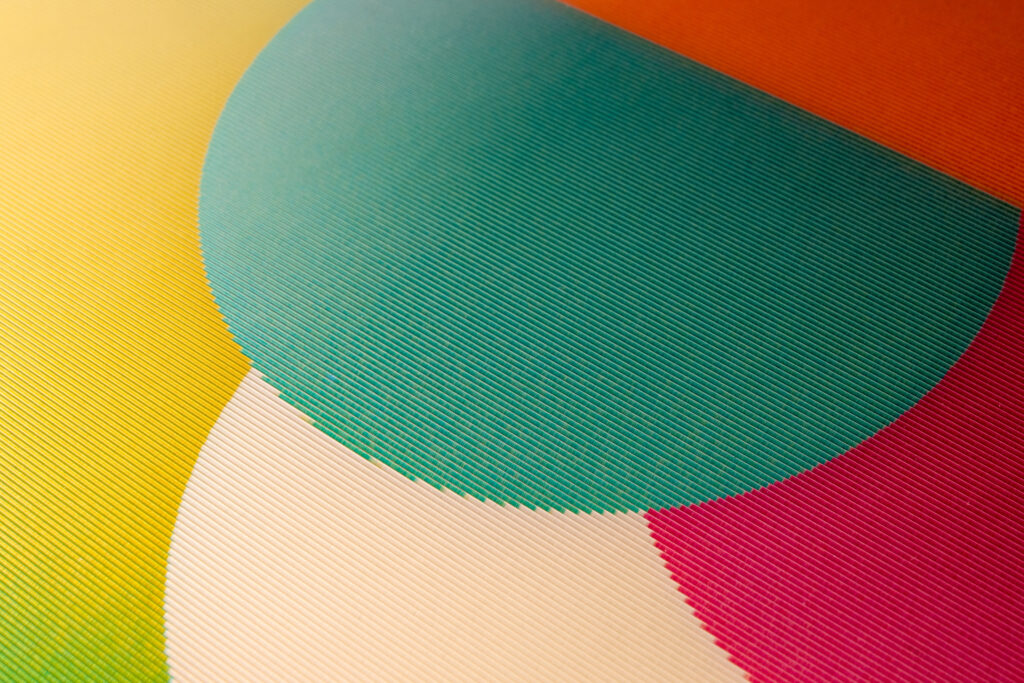
Invented in the early 1940s, lenticular printing was initially a technique for novelty products. However, as printing techniques became more advanced, they could be used in more applications. Lenticular printing gets its name from the multiple lenses that create the effect. Multiple images are interlaced into a single file and then printed. The printer then applies a lenticular lens to the image. The lens blocks certain parts of the image unless viewed from a specific angle. When the viewer tilts the printed material to another angle, the lens reveals a different image.
This technique can reveal two to three images and creates the illusion of three-dimensional depth, animation, or a flip or morph effect. Trading cards often use lenticular printing to create a 3-D image or to show an athlete or character in multiple poses or settings.
How NH Printers Use 3-D Images
How does this technique apply to your local print shop? At The Print Factory, we use every tool at our disposal to craft eye-catching printed materials. If your company needs marketing materials, lenticular printing is a memorable way to get your message across to customers. For example, you could print a postcard that has your logo on one lens and a discount code for your services on the other. Another idea is to use the lenticular technique to show before-and-after images. The possibilities are endless, and three-image prints allow for even more creativity.